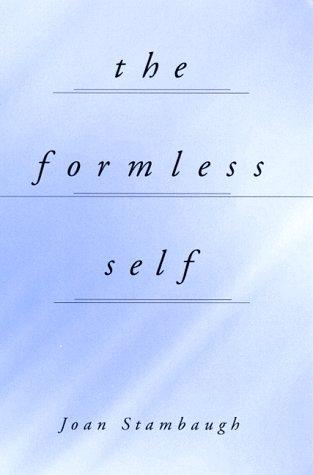
formless self, The
Joan Stambaugh
174 pages | ~5 hrs
Buddhism
Recommended Program
A 90-day program for founders who want to think clearer and get more done.
Learn Moreformless self, The
By Joan Stambaugh
Joan Stambaugh invites readers into a profound exploration of selfhood through the lens of three influential Japanese Buddhist philosophers. Drawing together teachings from Dogen, Hisamatsu, and Nishitani, this scholarly work illuminates a revolutionary understanding of what it means to exist without fixed identity.
At the heart of this philosophical journey lies the concept of the Formless Self, a transformative idea that challenges Western assumptions about personal identity and existence. Stambaugh carefully examines how these Buddhist thinkers, particularly through Hisamatsu's "The Fullness of Nothingness" and Nishitani's "Religion and Nothingness," present a vision of selfhood that transcends conventional boundaries.
The book addresses a crucial misconception by demonstrating that Eastern concepts of nothingness bear no resemblance to Western nihilism. Rather than representing emptiness or despair, this nothingness emerges as a creative force that allows authentic being to flourish. Through careful interpretation of these philosophical works, Stambaugh reveals how embracing formlessness can lead to genuine freedom from the limitations of ego-driven existence.
For readers seeking to understand alternative approaches to self-realization, this work offers access to profound wisdom that might otherwise remain hidden in specialized academic circles. The author serves as a bridge between Eastern philosophical traditions and contemporary spiritual seekers, making complex Buddhist concepts accessible to those ready to question fundamental assumptions about identity and consciousness.
What You'll Discover
- ✓ Explore Selbst
- ✓ Explore timeless philosophical wisdom
- ✓ Explore Buddhistische Philosophie
- ✓ Explore Philosophy
- ✓ Explore Personality
- ✓ Explore Japanese Philosophy
- ✓ Understand the nature of mind
- ✓ Explore Religion
Topics
Details
- Published
- 1999
- Publisher
- State University of New York Press
- ISBN-10
- 0791441490
- Pages
- 174
- Language
- EN
- LC Classification
- B5243.S44 S73 1999


