Anxiety has a way of making you feel like the problem is fundamentally you, that other people handle things, and you just spiral. That feeling is itself a symptom. What's actually happening when the alarm fires is that your nervous system is doing exactly what evolution designed it to do, which is to scan for threats and prepare you to respond to them. The trouble is that your body cannot distinguish between a genuine emergency and a difficult email, so it runs the same full biological program for both, flooding you with cortisol, tightening your chest, narrowing your focus, and convincing you that everything is urgent and nothing is safe. Understanding that mechanism is the beginning of working with it.
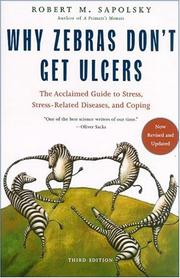
The books here approach this from different directions, because anxiety genuinely benefits from being worked on at more than one level. Van der Kolk spent decades showing how stress and trauma live in the body, not just the mind. Sapolsky explains the evolutionary design flaw that makes modern humans uniquely bad at turning the stress response off. Kabat-Zinn's MBSR program, developed in a hospital setting for people with chronic pain and illness, remains the most clinically validated framework for changing how you relate to difficulty. Chödrön and Brach offer something different: not techniques, but a shift in relationship to the anxiety itself, a way to stop treating it as the enemy. Nestor, unexpectedly, shows that the simplest intervention available to you is also one of the most powerful.
Some of these are long books for people who want to understand the whole picture. Others are thin and immediate. If you're in the middle of something hard right now, start with Chödrön or Brach. If you want to understand what's happening in your body before you try to change it, start with van der Kolk or Sapolsky. The understanding tends to soften the grip a little, even before you've tried a single technique.