Best Mindfulness Books for Entrepreneurs

The best mindfulness books for entrepreneurs and founders. Stay sharp, avoid burnout, and make better decisions without losing your edge.

The advice most founders get about mental performance boils down to discipline and willpower: wake up earlier, work harder, push through the resistance. And willpower works, for a while, until you find yourself snapping at a co-founder over something trivial, lying awake at 2 AM replaying a conversation with an investor, or realizing you have been optimizing a metric for three months that stopped mattering two months ago. The bottleneck in most companies is not strategy or talent or capital. It is the founder's nervous system, and the decisions that come out of it when that system is running on cortisol and fragmented attention. Mindfulness is not a wellness perk or a retreat luxury. It is the skill of noticing what is actually happening in your mind before it becomes a decision you cannot take back.

The books on this list are chosen for people who build things under pressure and do not have patience for vague spiritual advice. Chade-Meng Tan developed his emotional intelligence program at Google for engineers who needed evidence before they would sit still for five minutes. Dan Harris came to meditation after a panic attack on national television and writes about it with the skepticism of a journalist who needed to be dragged into the practice. Singer built a billion-dollar company while following a surrender-based spiritual path that contradicts nearly everything the startup world teaches about control. Colonna, the executive coach known as "the CEO Whisperer," treats the founder's unexamined psychology as the single biggest risk factor in any company. These are not books about relaxation. They are books about performing at a high level without destroying yourself in the process.

If you are skeptical about mindfulness and need to be convinced, start with 10% Happier. If you are already convinced and want the most practical toolkit, Search Inside Yourself is the most systematic. If you suspect that the patterns driving your company are the same ones driving your anxiety, Reboot will show you exactly how that works.

1

Hard Thing About Hard Things, The

by Unknown

Best for: honest leadership reality

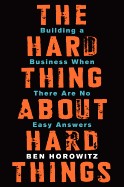
Horowitz built and sold Opsware for $1.6 billion and then co-founded Andreessen Horowitz, and this book is his unvarnished account of what that process actually felt like: the layoffs, the near-bankruptcies, the nights when the company was weeks from running out of money and the board was losing confidence. It is not a mindfulness book in any formal sense, but it belongs on this list because it is the most honest account of the emotional reality of building a company ever written, and because reading it alongside a meditation practice creates a useful feedback loop. Horowitz names the experiences that most founders suffer through in silence, the loneliness, the imposter syndrome, the decisions where every option is bad, and the simple act of seeing them named by someone who survived them is itself a form of clarity. If you read only one book about what building a company actually costs, this is the one.

289 pages Medium (200-400 pages)
View on Amazon
2

Search inside yourself

by Unknown

Best for: Google's approach to mindfulness

Tan was Google's "Jolly Good Fellow" (that was his actual job title) and he built the Search Inside Yourself program for engineers who would never have attended a meditation retreat but could be convinced by neuroscience and data. The framework is structured around three pillars: attention training, self-knowledge, and the development of useful mental habits, and the progression from "how to breathe without feeling ridiculous" to "how to have a difficult conversation without losing your composure" is designed for people who need each step to make logical sense before they will take the next one. Daniel Goleman and Jon Kabat-Zinn both contributed to the program, which has since been adopted by organizations worldwide. For founders and leaders who want emotional intelligence training that respects their analytical temperament, this is the most systematic and evidence-based option available.

288 pages Medium (200-400 pages) Meditation & Mindfulness
View on Amazon
3

10% Happier

by Unknown

Best for: meditation-skeptic founders

Harris was a network news anchor who had a panic attack on live television in front of five million viewers, and his subsequent investigation of meditation reads like an investigative journalist's reluctant conversion narrative. He interviews everyone from the Dalai Lama to self-help gurus to neuroscientists, and his ongoing skepticism functions as a filter: he only keeps the practices that survive his bullshit detector, which turns out to be a useful curation mechanism for Type-A readers who would rather read quarterly reports than sutras. His core finding, that meditation made him roughly 10% happier, is deliberately modest, and that modesty is what makes the book trustworthy. For founders who are convinced that mindfulness is either too woo-woo or too soft to be useful, Harris writes as someone who felt exactly the same way and changed his mind for reasons he can articulate clearly.

256 pages Medium (200-400 pages) Psychology & Consciousness
View on Amazon
4

surrender experiment, The

by Unknown

Best for: letting go of control

Singer was meditating in the woods outside Gainesville, Florida, when he made a decision that contradicts everything the startup world teaches about vision and control: he would stop following his personal preferences and instead say yes to whatever life put in front of him. What followed was a sequence of events so improbable it reads like fiction: he built a meditation community, then a construction company, then a billion-dollar medical software company, all while maintaining a daily meditation practice and living on the same piece of land where he had started. The book challenges the foundational assumption that success requires you to impose your will on reality, and whether you find his path replicable or not, the question it raises, how much of your stress comes from fighting what is actually happening, is one that every founder should sit with seriously.

252 pages Medium (200-400 pages) Comparative Religion
View on Amazon
5

Wherever You Go, There You Are

by Jon Kabat-Zinn

Best for: busy minds

Kabat-Zinn is the person who brought mindfulness into mainstream Western medicine by developing MBSR at UMass Medical Center, and this book is his most accessible work: short, self-contained chapters that each teach one aspect of mindfulness practice without requiring you to read them in sequence. For entrepreneurs whose reading happens in five-minute windows between meetings, the format is ideal, because any single chapter can shift how you relate to your next conversation or decision. His writing has a calm precision that makes complex concepts feel immediately testable, and his insistence that mindfulness is not about achieving a special state but about paying attention to the state you are already in is the corrective that most busy people need. This is the book to keep on your desk and open randomly when your mind is running faster than it needs to.

278 pages Medium (200-400 pages)
View on Amazon

Not sure which book is right for you?

Take our 2-minute discovery quiz and get personalized recommendations based on where you are in your journey.

Take the Discovery Quiz
6

Stillness is the Key

by Unknown

Best for: Stoic-leaning founders

Holiday draws on Stoicism, Buddhism, and Christianity to argue that the capacity for stillness, for slowing down your internal pace enough to see clearly, is not a luxury but a competitive advantage, and he supports the argument with stories from Churchill, Tiger Woods, Mr. Rogers, and Sadaharu Oh. The book is structured in short, punchy chapters that respect the time constraints of its audience, and the Stoic concept of the "Dichotomy of Control," distinguishing between what you can influence and what you cannot, is one of the most immediately useful cognitive tools for founders navigating the uncertainty of building a company. Holiday is not a meditation teacher, and the book does not prescribe a formal practice, but it makes the case for the internal quiet that makes all practices more effective. For founders who respond better to philosophy and history than to neuroscience or spirituality, this is the entry point.

Medium (200-400 pages)
View on Amazon
7

Boy Is Back

by Unknown

Best for: quick techniques

Tan's second book takes the insight from Search Inside Yourself and compresses it into micro-practices that can be done in a single breath. His thesis is that joy is a trainable skill, not a reward for achievement, and that the training can begin with something as small as noticing one pleasant sensation during a meal or taking three conscious breaths before opening your laptop. For founders who have already accepted that mindfulness matters but cannot find thirty minutes to meditate, this book removes the last excuse by making the minimum viable practice essentially instantaneous. The exercises are simple enough to feel slightly absurd, which is part of the point: the barrier to entry should be so low that not doing it becomes harder to justify than doing it.

Medium (200-400 pages)
View on Amazon
8

Deep Work

by Unknown

Best for: focus and execution

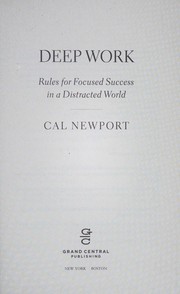
Newport is a computer science professor who makes a case that the ability to concentrate without distraction on cognitively demanding tasks is both increasingly rare and increasingly valuable, and that most people have systematically destroyed this ability through constant connectivity without realizing what they lost. His formula is straightforward: high-quality work produced equals time spent multiplied by intensity of focus, and the phenomenon he calls "attention residue," the cognitive cost of switching between tasks, explains why you can work for eight hours and feel like you accomplished nothing. For founders specifically, the book provides a framework for protecting the strategic thinking time that actually moves the company forward from the operational noise that feels urgent but rarely is. This is the most practical book on the list for restructuring how you spend your working hours.

295 pages Medium (200-400 pages) Psychology & Consciousness
View on Amazon

The founders who last tend to share a quality that does not show up in pitch decks or growth metrics: they can hold complexity without collapsing into reactivity. They can sit with uncertainty long enough to see what is actually happening before they move. That quality is not personality. It is a skill, and like any skill it improves with practice and atrophies without it. These books will not make building a company easier, because nothing makes that easier, but they will give you a better operating system for your own mind, and in a game where the quality of your decisions is the ceiling on everything else, that turns out to be the highest-leverage investment you can make.

Explore More Guides

Not sure which book is right for you?

Take our 2-minute discovery quiz and get personalized recommendations based on where you are in your journey.

Take the Discovery Quiz