
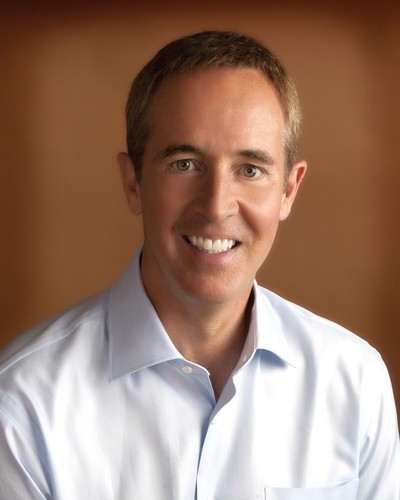
Andy Stanley
1 book on FireSoul · Georgia State University, Dallas Theological Seminary
Andy Stanley is an American pastor, author, and communicator who founded North Point Community Church in Alpharetta, Georgia in 1995, growing it into a network of more than 225 churches globally. His work centres on practical decision-making, leadership, and translating evangelical convictions into language accessible to people with no prior religious background. He is the son of the late Charles Stanley, host of the television and podcast series Your Move, and the author of more than twenty books.
Books by Andy Stanley

Biography
Born in 1958, he grew up inside a world most people only see from pews. His father, Charles Stanley, was senior pastor of First Baptist Church of Atlanta and the founder of In Touch Ministries, a broadcast ministry that pushed evangelical preaching through television and radio to audiences far outside Georgia. That upbringing was an education in how religious institutions actually work: what holds a large congregation together, how public identity gets constructed, and what it costs when a preacher’s platform outgrows the building. The culture of his father’s ministry was mid-century Baptist in its bones, formal, doctrinally precise, and built for insiders. Andy Stanley’s entire subsequent career has been, in one sense, an argument for a different architecture. Not a rejection of the theology, but a reimagining of its container.
His academic path combined two disciplines that turned out to fit each other surprisingly well. A journalism degree came first, earned at Georgia State University. Then he went to Dallas Theological Seminary, an institution with a rigorous dispensationalist tradition and a strong record of producing preachers capable of working across denominational contexts, where he completed a Master of Theology. Journalism trains a specific set of habits: identify what the reader actually needs, cut what the writer merely likes, lead with a question before reaching for an answer. Those habits didn’t disappear when Stanley moved into ministry. They became its method. When he describes his goal as helping people make better decisions and live a better life, the framing is closer to a column editor than to a seminary professor.
North Point Community Church was founded in 1995 in Alpharetta, Georgia, a northern suburb of Atlanta that was then absorbing large numbers of young families and new arrivals who had no particular church background to return to. Stanley was stepping away from a staff role that had positioned him, uncomfortably, within his father’s institutional world. Alpharetta offered a blank slate: a community without prior expectations, without loyalty to manage, without suspicion to disarm. The congregation’s founding identity was designed for that reality. No insider vocabulary, no assumed scriptural familiarity, no tone calibrated for the already converted. The aim was people who were genuinely curious, not people who were already convinced. Growth came fast. Within a few years, North Point had become one of the largest churches in the country. Today, according to his official biography, the ministry encompasses eight metro Atlanta campuses and a network of more than 225 partner churches globally, collectively serving hundreds of thousands of people each week. What started in a rented facility has become, over thirty years, one of the more consequential church-planting operations in American religious life.
The animating question underneath most of Stanley’s teaching isn’t theological in the academic sense. It’s practical. Something like: given where you want to be in ten years, does what you’re doing right now actually point there? Ask It builds an entire decision-making framework from exactly that premise, arguing that a single orienting question can clarify choices that would otherwise get made by default. Better Decisions, Fewer Regrets extends that framework into a more systematic treatment of the mental habits that lead people toward choices they later struggle to explain. Visioneering, one of his earlier titles, applies related logic to organisational leadership, making the case that a clearly held picture of a preferred future functions as both spiritual discipline and practical management tool. When Work & Family Collide works through the specific tension facing people who are trying to hold professional ambition and family life together without sacrificing one to the other. Twenty-plus books published over three decades share a single recurring concern: the gap between what people say matters to them and how they actually spend their time, money, and attention. Stanley doesn’t moralize about the gap. He tries to close it by teaching better questions.
The New Rules for Love, Sex & Dating is among his most widely circulated titles, and it works the same way. It isn’t a catalog of prohibitions. It’s an argument that the decisions made before a relationship begins largely determine what the relationship becomes. The intended audience is young adults who find traditional religious language about sexuality unconvincing, which fits Stanley’s broader project of rendering evangelical convictions in a register that functions outside the church building. Starting Point, a small-group series developed for August and September of 2013, applied the same instinct to faith itself. Eight conversations structured around questions a genuine seeker might actually bring, rather than answers a longtime churchgoer would already have. “Everything has a beginning,” the series materials open. The whole project was built on that premise: that someone without a religious background deserves an actual on-ramp.
His television program Your Move with Andy Stanley has been broadcast since 2012. It launched on NBC in a late-night slot that followed Saturday Night Live, then added a CBS slot after The Late Late Show with James Corden beginning in 2017. Late-night placement sent a clear message about intended audience: not people already planning to attend a Sunday service, but people who weren’t. The podcast under the same name won the Academy of Podcasters award for best spirituality and religion podcast in 2016. His official site reports that millions of episodes are consumed monthly across television, YouTube, and podcast platforms. The Andy Stanley Leadership Podcast runs as a separate channel, directed at business and organisational leaders, and has built a following among people who wouldn’t use the word religious to describe themselves at all.
He’s been speaking at leadership events for more than three decades, before audiences of church leaders and corporate executives alike. That crossover reflects a conviction he returns to consistently: that clarity about purpose and decision-making isn’t a religious idea but a human one. His most quoted line, which appears on both his official biography page and in various republished profiles, captures something real about his posture toward audiences: “I cannot fill their cups, but I have a responsibility to empty mine.” He’s not claiming to have answers his listeners lack. He’s committing to say clearly what he actually thinks, and trusting the listener to do something with it.
What Stanley built sits at a genuine crossroads that different traditions have each had to navigate in their own way. Accessibility as a value, the instinct to reach people who feel they have no entry point into inherited faith, can look like compromise from inside a tradition, and like generosity from outside it. Probably it’s both, which is what makes it worth arguing about. The question isn’t whether Stanley made concessions to reach a wider audience. Of course he did. The question is whether those concessions serve the thing they were supposed to serve. Three decades and 225 partner churches suggest they did, though what they served is still being determined.
A 2017 survey of U.S. pastors published in Outreach magazine placed Stanley among the ten most influential living pastors in America. He and Sandra live in Milton, a suburb north of Atlanta, and have three adult children. Charles Stanley died on April 18, 2023. Stanley’s next book, What Great Leaders Do, is scheduled for publication in August 2026.
Core Teachings
-
Decision-based discipleship
Stanley’s central method asks whether present choices align with a clearly imagined preferred future, applied to personal, relational, and organisational life.
-
Accessible faith communication
He consistently works to render evangelical convictions in vocabulary and tone that functions for people with no church background, removing insider language and assumed familiarity with Scripture.
-
Visioneering
His framework for organisational and spiritual leadership argues that a clearly held picture of a preferred future functions simultaneously as spiritual discipline and practical management tool.
-
Leadership clarity
Through the Andy Stanley Leadership Podcast and live events, he offers pragmatic frameworks to help leaders in both church and business contexts make better decisions and move further faster.
-
Relational decision-making
In works like The New Rules for Love, Sex & Dating, Stanley argues that choices made before a relationship begins largely determine its shape, targeting young adults who find traditional religious language about relationships unconvincing.
Lineage
- Teachers
-
- Charles Stanley — Father; senior pastor of First Baptist Church of Atlanta and founder of In Touch Ministries
Quotes
“I cannot fill their cups, but I have a responsibility to empty mine.”
“Life is complicated. You want to get it right. I want to help.”
“Everything has a beginning.”
External Links
- Andy Stanley – Wikipedia (wikipedia)
- Andy Stanley Official Biography (official_site)
- Starting Point Series – North Point Ministries (official_site)
- Your Move with Andy Stanley (official_site)
- Andy Stanley – YouTube (video)
- Andy Stanley – Instagram (official_site)
- North Point Ministries founding – Wikipedia (academic)
- Andy Stanley Leadership Podcast (official_site)