
Athalya Brenner-Idan is a Dutch-Israeli biblical scholar and Professor Emerita at the University of Amsterdam, best known for founding feminist biblical criticism as a serious academic discipline through her twenty-volume Feminist Companion to the Bible series and her presidency of the Society of Biblical Literature in 2015.
Books by Athalya Brenner
Biography
Athalya Brenner-Idan is a Dutch-Israeli biblical scholar who helped reshape how the Hebrew Bible gets read by insisting that gender is a question worth asking of ancient texts.
She was born on 17 July 1943 in Haifa, earned her BA at Haifa University and her MA at the Hebrew University of Jerusalem, and completed her PhD in Near Eastern Studies at the University of Manchester in 1979 under the supervision of James Barr. When she submitted her second book, The Israelite Woman: Social Role and Literary Type in Biblical Narrative, for promotion to senior lecturer at an Israeli institution, a faculty committee rejected it on the grounds that feminist research was “not truly academic, not meaningful, a passing fad.” A senior administrator suggested she look for a high school teaching post instead. She didn’t.
That rejection tells you something about both the moment and the woman. Brenner went on to build the Feminist Companion to the Bible series, eventually running to twenty volumes, and to hold chairs at the University of Amsterdam, Tel Aviv University, and Stellenbosch University. In 2002, the University of Bonn awarded her an honorary doctorate. In 2015, she served as president of the Society of Biblical Literature, the largest professional body in the field. Her presidential address was titled “On Scholarship and Related Animals.”
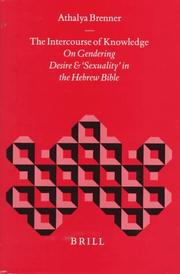
Her books don’t confine themselves to a single register. I AM: Biblical Women Tell Their Own Stories (2004) gives voice to female figures in scripture through first-person monologue; The Intercourse of Knowledge: On Gendering Desire and ‘Sexuality’ in the Hebrew Bible (1997) works as close critical analysis. What holds them together is a conviction that the women in these ancient texts can’t be understood if you pretend the men who wrote them had no stake in how women were portrayed. That’s not a political claim so much as a methodological one, and it’s changed the field permanently.
There’s something worth sitting with in the fact that one of the most consequential contributions to biblical scholarship in the twentieth century came from a woman who was told, formally and in writing, that her work didn’t count. The texts Brenner studies are themselves full of that dynamic: voices pushed to the margin that turn out to be carrying the weight of the story. She seems to have noticed the symmetry.
External Links
- Athalya Brenner-Idan – Wikipedia (wikipedia)
- Israel Bible Center faculty page (faculty_profile)
- Tel Aviv University profile (faculty_profile)
- Jewish Women's Archive entry (encyclopedia)