

B. Alan Wallace
3 books on FireSoul · Tibetan Buddhism, Vajrayāna, Dzogchen, Madhyamaka
B. Alan Wallace (born 1950) is an American scholar, translator, and meditation teacher who spent fourteen years as a Tibetan Buddhist monk ordained by the Dalai Lama before earning a physics and Sanskrit B.A. from Amherst College and a religious-studies Ph.D. from Stanford. He is founder of the Santa Barbara Institute for Consciousness Studies and the author or translator of more than forty books, widely known for his argument that contemplative introspection is a rigorous scientific method excluded from Western science by ideological bias rather than evidence.
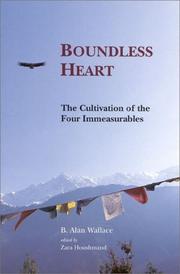
Books by B. Alan Wallace


Biography
B. Alan Wallace is an American scholar, translator, and meditation teacher who has spent more than five decades building a rigorous case that contemplative inquiry and empirical science are not rival projects but unfinished halves of a single one.
Wallace was born in 1950 into a devoutly Christian household; his father was a Baptist theologian, and the faith of that upbringing shaped a lifelong insistence that the inner life deserves serious investigation, not dismissal. At thirteen he found a second passion when a science teacher sparked his interest in ecology, and the tension between those two early loves, the sacred and the empirical, never quite left him. At eighteen he enrolled at the University of California, San Diego. He didn’t stay long. In 1970 he began studying the Tibetan language and Buddhism at the University of Göttingen in Germany, and within a year he had travelled further east still, leaving his college studies in 1971 to move to Dharamsala, India, where the Tibetan exile community had gathered around the fourteenth Dalai Lama.
That autumn in Dharamsala he had his first one-on-one meeting with the Dalai Lama, a meeting he has described as the pivotal encounter of his life. He opened the conversation by asking how one could cultivate virtue without feeling superior to others as a result. The Dalai Lama’s answer, Wallace has said, touched his heart, and from that exchange he knew he’d found his primary spiritual mentor. He was twenty-one. The meeting set the direction of the next fourteen years: sustained study of Tibetan Buddhism, medicine, and language in Dharamsala, and in 1975 ordination as a Buddhist monk by the Dalai Lama himself. That same year he took up a teaching post at the Institute for Higher Tibetan Studies in Mont Pèlerin, Switzerland, where he stayed until 1979, teaching while continuing to deepen his own practice under some of the most senior Tibetan lamas then living in exile.
Those Dharamsala years were materially sparse. According to Wallace’s own account, a professor he knew pooled three hundred dollars from his own pocket and from graduate students and handed the sum to Wallace to live on. It lasted more than a year. The act of generosity stayed with him for decades. In 1980, after his years in Switzerland, he completed a five-month solitary retreat in the mountains above Dharamsala, an extended withdrawal that marked the culmination of his formal monastic period. After leaving monastic life, he devoted four additional years entirely to meditation practice before deciding, in 1984, to return to Western academic study with something specific in mind.
He enrolled at Amherst College in 1984, choosing physics and the philosophy of science as his primary subjects, eventually earning a B.A. in physics, philosophy of science, and Sanskrit in 1987. The combination was deliberate and strategic. Wallace wasn’t retreating from contemplative life; he was acquiring the conceptual vocabulary to defend it on scientific terrain. Physics gave him the tools to challenge the materialist philosophy of mind from inside the natural sciences rather than from the margins of religious studies. Sanskrit gave him access to primary texts that most Western scholars could only read in translation. He then pursued doctoral work at Stanford University, completing a Ph.D. in religious studies in 1995. His dissertation examined the cultivation of sustained voluntary attention in Indo-Tibetan Buddhism, a subject that cuts straight to what he would spend the rest of his career arguing: that the trained, introspective mind is a legitimate instrument of inquiry, not merely a spiritual exercise with subjective benefits. By the time he left Stanford, he had behind him fourteen years as a monk, five months in solitary retreat, a physics degree, and a doctorate. Not many people arrive at their academic career that way.
The year his undergraduate degree was conferred, 1987, also marked his first participation as interpreter at the Mind and Life Institute, the forum the Dalai Lama had established for structured dialogue with Western scientists. Wallace continued in that role, as participant, interpreter, and intellectual contributor, through 2009, two decades of sustained engagement that made him one of the most visible figures in the conversation between Tibetan Buddhist thought and disciplines including neuroscience, cognitive psychology, and theoretical physics. He translated for and studied under several of the most respected Tibetan lamas of that generation, and the combination of that lineage access with his Western scientific credentials gave him a position at the dialogue’s centre that few others have occupied. Over those same decades he produced, wrote, or translated more than forty books, ranging from practical meditation manuals to densely argued philosophy of mind.
After Stanford, Wallace lectured for four years in the Department of Religious Studies at the University of California, Santa Barbara. In 2003 he founded the Santa Barbara Institute for Consciousness Studies, built on two convictions: that Buddhism and science belong in genuine collaboration on questions of mind and consciousness, and that contemplative inquiry across the world’s religious traditions needs to be revived as a path to what he calls genuine well-being. The Institute’s public framing is frank about the stakes it sees. It characterises modern civilisation as one driven by materialist assumptions, the pursuit of pleasure as a governing ideal, and consumption as an organising principle, contending that this combination has generated both a profound crisis of meaning and severe damage to the natural world. Wallace has never softened that diagnosis. “One of the most persistent of all delusions,” he has written, “is the conviction that the source of our dissatisfaction lies outside ourselves.”
The Institute has channelled this framing into concrete projects. The Cultivating Emotional Balance programme, developed in collaboration with researcher Clifford Saron and others under the Institute’s umbrella, translates its commitments into a structured curriculum that treats emotion itself as a path toward well-being, both personal and relational. Its ambition is explicitly not the therapeutic minimalism Wallace criticises elsewhere. The goal isn’t stress reduction; it’s closer to what he called, in the title of his 2005 Wiley book, genuine happiness, the kind that doesn’t depend on external conditions remaining favourable. Two new centres for contemplative research are also under active development: one near Castellina Marittima in Tuscany, Italy, and one in Matiri Valley, Tasman, New Zealand. Both are designed to provide dedicated conditions for contemplatives, scientists, and philosophers to investigate consciousness together, with proper depth and without the interruptions of ordinary institutional life.
Wallace has written and edited more than forty books. Genuine Happiness: Meditation as the Path to Fulfillment, published by Wiley and reviewed by Publishers Weekly in February 2005, lays out specific meditation methods, among them mindfulness of breathing, as practical routes to what he calls the conquest of inner obscurations and a life of real human flourishing. It moves through techniques with the specificity of someone who practiced them for fourteen years before attempting to explain them in English. Minding Closely: The Four Applications of Mindfulness extends that precision into a systematic treatment of the fourfold mindfulness framework central to Theravāda and later Buddhist traditions. Meditations of a Buddhist Skeptic: A Manifesto for the Mind Sciences is the more combative text, addressed to scientists and philosophers of mind directly, arguing that the field has systematically excluded the most important variable, subjective experience, by treating it as noise rather than signal. The Attention Revolution traces the nine-stage Tibetan framework for developing samatha, the concentrated calm that makes deeper meditative insight possible; it remains his most widely read single work on formal practice. Dreaming Yourself Awake brings Wallace’s detailed knowledge of dream yoga into practical reach, situating the lucid dreaming practices of Vajrayāna within both their traditional Tibetan framework and the emerging sleep science literature. He also produced an English translation of the Bardo Thodol, the text attributed to Padmasambhava and known in the West as the Tibetan Book of the Dead.
The intellectual argument running through nearly all of this work can be stated plainly. Modern science has been enormously productive in investigating the physical world, but it has operated under a philosophical assumption, that the mind is simply a product of the brain, that it hasn’t proved and can’t prove with its current methods. Buddhist contemplative traditions, by contrast, have spent two and a half millennia developing first-person methods for investigating the mind directly. Wallace isn’t tentative about what follows. “Subjectivity is the central taboo of scientific materialism,” he wrote in Contemplative Science, and the modern obsession with brain chemistry has produced a medicated substitute for happiness rather than the real thing. He’s said explicitly that prominent scientists including E. O. Wilson and Richard Dawkins practise what amounts to a nature religion, with the material universe as their sacred object. He calls this critique important rather than hostile; his point is that the philosophical commitments driving mainstream neuroscience and cognitive science are just as metaphysically loaded as the religious commitments those scientists tend to dismiss.
His critique of the mind sciences is matched by an equally sharp one aimed within Buddhism. He’s consistently opposed to what he calls Secular Buddhism: the project of stripping Buddhist practice of its metaphysical commitments and packaging it as a wellness intervention. For Wallace, this isn’t a sensible modernisation but a gutting of the tradition. The practices only make full sense within the larger framework, including doctrines many Western scientists regard as inadmissible, among them rebirth and the existence of forms of consciousness not reducible to brain states. He doesn’t argue these defensively; he argues them as scientific hypotheses that haven’t been adequately tested and that researchers have been systematically disincentivised from studying. He’s stated explicitly that reincarnation should be investigated empirically by researchers willing to design studies that don’t assume the conclusion. He coined the term cognoscopy, a systematic scoping of the mind, partly to signal that contemplative introspection can be made as methodical as any third-person scientific procedure. The neologism is characteristic: playful, exact, and pointed.
He cites the nineteenth-century American psychologist and philosopher William James as a personal hero. The connection matters. James argued that psychology couldn’t become a genuine science while refusing to take inner experience seriously, and he proposed that training in sustained, voluntary attention would be education par excellence. Wallace quoted that line in his 2005 lecture at Brown University, the inaugural Mary Interlandi Lecture on Contemplative Studies, and added that Buddhist monks had already known the fruits of such training for a hundred generations before modern psychology tried to catch up. The lecture was part of a broader institutional initiative at Brown led by religious studies professor Hal Roth, who had been Interlandi’s teacher in his course on the great mystical traditions of Asia before her death in 2003, and who was working to establish contemplative studies as a formal concentration. Roth said publicly that he’d found Wallace’s framing of the global dangers of separating first-person and third-person modes of inquiry both compelling and practically urgent. The two-day retreat Wallace led at Brown that same weekend, alongside the lecture itself, was supported by the Interlandi family, the Francis Wayland Collegium for Liberal Learning, and the university’s Chaplain’s Office.
There’s something worth sitting with in the shape of this life. A Baptist theologian’s son grows up in mid-century America, discovers ecology at thirteen, leaves university at eighteen, travels to Dharamsala, receives ordination from one of the twentieth century’s most consequential spiritual figures, spends years in retreat and intensive study, then walks back into Western academia with the explicit aim of showing that everything modern science has excluded from its account of the mind is exactly what matters most. Traditions this different, a Baptist childhood and a Tibetan monastery, usually produce people who choose one and leave the other. Wallace has built his entire intellectual project on refusing that choice. That refusal is, in its own way, a teaching about what different traditions might owe each other: not the erasure of their distinctiveness, but the honesty to ask what the other knows that you don’t.
The mind sciences debate Wallace has spent decades forcing into the open is now, tentatively, moving in the direction he argued for. Contemplative studies programmes exist at major universities. Neuroscientists whose early careers were shaped by attending Mind and Life dialogues have published findings on attention training that would have been career-threatening proposals in the 1980s. The Cultivating Emotional Balance curriculum has been implemented in educational contexts well beyond the Santa Barbara Institute’s immediate orbit. None of this has settled the philosophical questions Wallace cares about most, the hard problem of consciousness, the status of first-person evidence, the relationship between mind and brain, but the conversation has shifted in register. It’s less about whether these questions deserve serious attention and more about how to pursue them.
Wallace has described his spiritual goal without ornamentation: “To become a buddha for the benefit of the world.” He remains the director of the Santa Barbara Institute for Consciousness Studies, active in the development of the contemplative research centres in Tuscany and New Zealand, and one of the most persistent voices arguing that the question of consciousness is simultaneously the central scientific problem of our time and the central spiritual one, and that it can’t be adequately addressed while looking only from the outside in. His output across five decades, more than forty books written or translated, institutional ventures on three continents, and decades of service as interpreter between two civilisational traditions, is the work of someone who decided early that the tension between his father’s theology and his science teacher’s ecology didn’t need to be resolved. It needed to be deepened.
Core Teachings
-
Contemplative Science and First-Person Inquiry
Wallace argues that Buddhist meditation traditions have developed rigorous first-person methods for investigating consciousness that Western science has excluded by treating subjectivity as inadmissible data. He frames introspective training as a legitimate empirical methodology, not merely a spiritual practice.
-
Samatha and the Cultivation of Attention
Drawing on the nine-stage Tibetan framework for developing concentrated calm (samatha), Wallace teaches that sustained voluntary attention is the foundation of all deeper meditative insight and that its systematic training is what William James called ‘the education par excellence.’
-
Critique of Scientific Materialism
Wallace contends that mainstream neuroscience and cognitive science operate under unproven materialist assumptions — that mind is merely a product of the brain — and that this philosophical commitment has produced a medicated substitute for genuine happiness. He argues figures such as E. O. Wilson and Richard Dawkins practice a form of nature religion.
-
Dream Yoga and Lucid Dreaming
Wallace situates the Vajrayāna practice of dream yoga within both its traditional Tibetan framework and contemporary sleep science, arguing that lucid dreaming practices are a form of vipashyana and that they belong to the larger project of investigating the nature of consciousness.
-
Genuine Happiness and the Path to Fulfillment
Against the therapeutic minimalism of secular mindfulness, Wallace argues that genuine happiness is a stable quality of mind achievable through specific meditation methods including mindfulness of breathing, and that it doesn’t depend on external conditions remaining favourable.
Lineage
- Teachers
-
- H.H. the 14th Dalai Lama
- Monastery / Center
- Institute for Higher Tibetan Studies, Mont Pèlerin, Switzerland
Quotes
“One of the most persistent of all delusions is the conviction that the source of our dissatisfaction lies outside ourselves.”
“Subjectivity is the central taboo of scientific materialism.”
“To become a buddha for the benefit of the world.”
External Links
- B. Alan Wallace — Wikipedia (wikipedia)
- Santa Barbara Institute for Consciousness Studies (official_site)
- Buddha on the Brain — Salon interview (2006) (interview)
- Conversation with Alan Wallace — Awakin Call (interview)
- Wallace at Brown: Buddhist Introspection and Western Science (2005) (academic)
- Genuine Happiness — Publishers Weekly review (publisher)
- B. Alan Wallace on Lucid Dreaming and Dream Yoga — Edge of Mind Podcast (podcast)
- B. Alan Wallace — Dhamma Wiki bibliography (archive)
- Mind and Life Institute (foundation)
- Minding Closely — Santa Barbara Institute (publisher)