
Bruce D. Chilton is an American biblical scholar and Episcopalian priest best known for situating Jesus within first-century Judaism through the study of the Aramaic Targumim. Holding the Bernard Iddings Bell Professorship at Bard College since 1987, he has authored more than fifty books, founded two academic journals, and served simultaneously as a working parish priest in Barrytown, New York.
Books by Bruce Chilton
Biography
Bruce D.
Bard College, the liberal-arts institution on the Hudson where he’d eventually spend his career, was where he earned his undergraduate degree. He then moved to General Theological Seminary, the Episcopal Church’s oldest seminary, completing his M.Div. there in 1974. Graduate study brought him to St. John’s College, Cambridge, where he read for a PhD in New Testament under Ben F. Meyer, a Canadian scholar whose commitment to historical precision shaped Chilton’s thinking at its foundations. What Cambridge gave him, more than anything, was a method: Aramaic sources weren’t noise to be cleared away before interpretation could begin; they were the primary evidence.
Academic appointments followed at the Universities of Cambridge, Sheffield, and Münster, and then at Yale, where he became the institution’s first Lillian Claus Professor of New Testament. In 1987 he came back to Bard, this time to the Bernard Iddings Bell Professorship of Religion, and he hasn’t left. The other roles accumulated around the professorship without displacing it: Rector of the Church of St. John the Evangelist in Barrytown, New York, Chaplain of the College, and Executive Director of the Institute of Advanced Theology, which he also founded. Each of those roles is a different answer to the same question: how do you keep theological thinking tethered to something real?
The Targumim are Aramaic renderings of the Hebrew scriptures, produced across the early rabbinic centuries in synagogue contexts, and Chilton’s signal contribution was insisting that they be treated as primary historical evidence rather than secondary curiosities. Mid-twentieth-century New Testament scholarship had largely set Aramaic sources to one side; Chilton reversed that ordering. His 1982 monograph The Glory of Israel: The Theology and Provenience of the Isaiah Targum, published in Sheffield’s Journal for the Study of the Old Testament Supplement series, established the groundwork. Then The Isaiah Targum appeared in 1987, the first critical commentary ever written on the Aramaic Isaiah. He edited and translated the text himself before pressing it into service for theological and historical argument. The central claim running through both books is demanding in its execution even where it’s simple in outline: understanding what Jesus meant by “the Kingdom of God” requires knowing what Aramaic synagogue interpreters were already doing with the prophetic vocabulary he was drawing on.
A version of that claim had appeared earlier in A Galilean Rabbi and His Bible, published by Glazier and SPCK in 1984, which situated Jesus within the tradition of Galilean rabbinic interpretation rather than at its margins. The argument kept developing. The Temple of Jesus, issued by Penn State University Press in 1992, addressed what Jesus’s actions in the Temple meant within the cultic politics of his day. Pure Kingdom, from Eerdmans in 1996, took up Jesus’s vision of God directly. And Judaic Approaches to the Gospels, published by Scholars Press in Atlanta in 1994, made the project’s full shape explicit: the Gospels aren’t Greek texts that happen to register Jewish customs at the margins; they’re records of a Jewish teacher whose categories, conflicts, and ritual actions can’t be read without first-century Judaism as the interpretive frame.
He didn’t keep any of this inside the lecture hall.
Rabbi Jesus: The Jewish Life and Teaching That Inspired Christianity, published by Doubleday on October 25, 2000, carried the full scholarly apparatus into a narrative accessible to general readers. Five formative environments structure the book, each identified through archaeology and historical reconstruction: rural Jewish Galilee, the circle around John the Baptist, the towns where Jesus worked as a rabbi, the political pressures exerted by Herod Antipas’s administration, and the controversy over the Temple at Jerusalem. Targum scholarship, archaeological findings, and historical method work through the book together, and the portrait they produce is of a teacher whose identity, extracted from his Jewish world, wouldn’t be recognisable as itself. It’s the book most readers reach for first when they want to know what Chilton actually thinks.
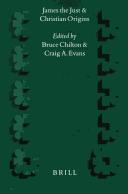
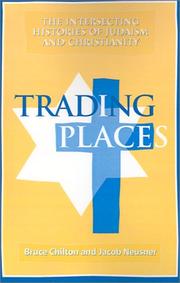
His collaboration with Jacob Neusner, the great American scholar of rabbinic literature, produced some of the most rigorous comparative work in the field. Together they wrote Judaism in the New Testament (Routledge), a trilogy titled Judaism and Christianity: the Formative Categories (Trinity Press International), and Jewish-Christian Debates (Fortress). None of these books papers over the differences between the two traditions. They map the differences precisely, because Chilton and Neusner both believed that honest clarity about genuine divergence is more useful than false harmonisation. With Craig Evans, Chilton co-edited further volumes extending the Jesus series that Pure Kingdom had opened. He contributed the article on Caiaphas to the Anchor Bible Dictionary, and according to the Bard Institute of Advanced Theology’s profile, that piece brought him into consultation with academic, governmental, and journalistic reporters when Caiaphas’s tomb was found outside Jerusalem. With Paul Flesher he wrote Judaic and Christian Visions of the Social Order, pushing the comparative project into questions of ethics and communal life.
What strikes me about Chilton’s work across these decades is that both the rabbinic and the patristic traditions he studies are live streams, not museum exhibits. They’ve been shaping human souls and human communities for two millennia. Their differences are real and sometimes irreconcilable, but they’re grappling with the same persistent questions: justice, sacrifice, what it means to be present to the holy. Chilton won’t dissolve those differences into easy synthesis, and that refusal is itself a form of respect for what each tradition actually is.
Beyond his own books, he shaped the infrastructure of his discipline. He founded both the Journal for the Study of the New Testament and the Bulletin for Biblical Research, both still active. He co-edited The Cambridge Companion to the Bible in 2007 and wrote Redeeming Time: The Wisdom of Ancient Jewish and Christian Festal Calendars in 2002. His output runs to more than fifty books and a hundred articles. Later work pushed into harder territory: Abraham’s Curse: Child Sacrifice in the Legacies of the West examined the violent inheritance threading through all three Abrahamic traditions, a project requiring the same historical exactness he’d applied to the Targumim but turned toward considerably more uncomfortable material.
The priesthood and the scholarship aren’t decorative counterparts. There’s real tension between what a Sunday congregation in Barrytown needs from Chilton and what his graduate students need, and he’s been navigating that tension at Bard for more than thirty years. General Theological Seminary, his old M.Div. institution, awarded him the Doctor of Divinity honoris causa at its fall Convocation on October 13, 2011. He lives in Annandale-on-Hudson, New York with his wife, Odile; they have two sons.
Core Teachings
-
Jesus within Judaism
Chilton argues that Jesus is intelligible only as a first-century Jewish teacher operating within Galilean rabbinic tradition, and that his language, gestures, and disputes lose coherence when extracted from that context.
-
Targum scholarship
Chilton treats the Aramaic Targumim — synagogue paraphrases of the Hebrew Bible — as primary historical evidence for early Jewish interpretation, producing the first critical commentary on the Isaiah Targum.
-
Kingdom of God
Reading Jesus’s proclamation of the Kingdom through Aramaic prophetic vocabulary, Chilton argues the concept is rooted in what synagogue interpreters were already doing with Isaiah and related texts.
-
Jewish-Christian comparative theology
In collaboration with Jacob Neusner, Chilton mapped genuine divergences between Judaism and Christianity rather than smoothing them over, arguing that honest difference is more useful than manufactured harmony.
-
Sacrificial violence in the Abrahamic traditions
In Abraham’s Curse, Chilton examined the violent inheritance running through Jewish, Christian, and Islamic traditions, applying historical-critical method to the ethics of sacrifice and child offering.
Lineage
- Teachers
-
- Ben F. Meyer
External Links
- Bruce Chilton — Wikipedia (wikipedia)
- Bard Institute of Advanced Theology — Chilton profile (foundation)
- General Theological Seminary — Honorary Degree Announcement 2011 (archive)
- Rabbi Jesus — Internet Archive (archive)
- Abraham's Curse — Internet Archive (archive)
- Judaic Approaches to the Gospels — Brill (publisher)
- Judaic and Christian Visions of the Social Order — Google Books (publisher)
- Bard College (official_site)