

Chögyam Trungpa
1939–1987 · 5 books on FireSoul · Kagyu, Nyingma, Shambhala Buddhist
Chögyam Trungpa (1939, 1987) was a Tibetan Buddhist master of the Kagyu and Nyingma lineages who became a central figure in bringing Vajrayana teaching to the West, founding Vajradhatu, Naropa University, and the Shambhala Training method. His influential books, especially Cutting Through Spiritual Materialism (1973), shaped a generation of Western practitioners, while his heavy drinking, sexual predation, and the institutional culture he created generated abuse and controversy that persisted long after his death.
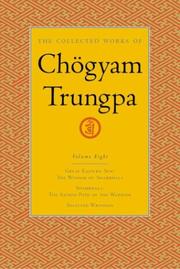
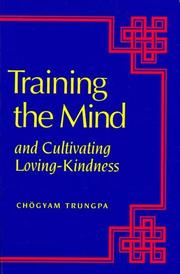
Books by Chögyam Trungpa



Biography
Chögyam Trungpa was a Tibetan Buddhist master, poet, and institution-builder whose work transformed how Vajrayana Buddhism took root in the West, and whose life remains among the most fiercely debated in modern religious history.
Ordination came at eight years old. Not long after, he was installed as supreme abbot of the Surmang monasteries in eastern Tibet, a cluster of ancient institutions placed under the care of a child who hadn’t yet reached adolescence. Among his principal teachers were Jamgon Kongtrul of Sechen, Dilgo Khyentse Rinpoche, and Khenpo Gangshar, three of the most distinguished masters working in Tibet during the mid-twentieth century. Through their guidance, he received transmissions from both the Kagyu and Nyingma lineages and became a committed practitioner of the ri-mé, the nonsectarian ecumenical current in Tibetan Buddhism that placed the preservation of teachings above any single school’s boundaries. Moving between the Kagyu and Nyingma streams wasn’t unusual for a ri-mé master, but this doctrinal reach would later show itself in his translations and in the secular Shambhala system he spent his final decade constructing.
The Chinese occupation that began in 1950 didn’t immediately rupture his training, but by 1959 the situation had become irreversible. Trungpa was among thousands of Tibetans who crossed the Himalayas on foot into India. He was twenty years old. After settling briefly near the exile community forming around Dharamsala, a Spaulding scholarship brought him to Oxford in 1963, where he studied comparative religion and fine arts at St Antony’s College. Western philosophy, modernist art, and the texture of postwar British intellectual life pressed on him during those years, and he began working out, methodically, how Buddhist teachings might be translated not just linguistically but conceptually, for minds formed by a tradition entirely unlike the one he’d grown up inside.
In 1967, he co-founded Samye Ling Monastery in Dumfriesshire, Scotland, the first Tibetan Buddhist centre established in the West. It’s still operating. The British years were turbulent in other ways: a car accident in 1969 left partial paralysis on his left side, and he renounced his monastic vows that same year. In 1970, he married Diana Judith Pybus, who was sixteen at the time of the marriage, and the two emigrated to North America together. Diana, later known as Diana Mukpo, remained part of his closest circle until his death. She was at his bedside in Halifax when he died in 1987.
Trungpa reached the United States in 1970 and settled in Boulder, Colorado, which became the operational centre of everything he built over the next seventeen years. The timing was precise in an almost uncanny way: the American counterculture was hungry for eastern teaching and mostly wanted confirmation of what it already believed. He didn’t give it that. His central argument was that spiritual seeking could itself function as a sophisticated form of self-deception, a way of accumulating new identities, experiences, and concepts without ever turning to look at the ego doing the accumulating. He called this spiritual materialism. The 1973 book built around that concept, Cutting Through Spiritual Materialism, sold over 200,000 copies and became one of the most widely read Buddhist texts published in English, partly because it was direct, occasionally funny, and aimed squarely at the people most likely to pick it up. It remains his most recognised title. Also in 1973, he founded Vajradhatu, the umbrella organisation for his expanding network of meditation centres. Reorganised later as Shambhala International, the network eventually reached more than 200 centres and retreat destinations across dozens of countries, with its headquarters in Nova Scotia, Canada.
The Naropa Institute opened in Boulder in the summer of 1974. Trungpa conceived it as an accredited academic institution where Buddhist contemplative education and Western scholarly inquiry could operate together, and the inaugural summer drew a remarkable concentration of people. Allen Ginsberg and William S. Burroughs were present, alongside roughly 1,500 seekers who had travelled to hear him lecture. Ginsberg wasn’t merely visiting; he became a committed student and close collaborator, and together they co-founded the Jack Kerouac School of Disembodied Poetics at Naropa, which brought several major American poets into extended contact with Buddhist thought. Anne Waldman and Diane di Prima both taught and practised there over the following years. The Naropa Institute is now Naropa University, still active in Boulder, and the Jack Kerouac School continues to operate as a graduate writing programme.
His student community was unusually wide across disciplines. The composer Peter Lieberson, son of Columbia Records president Goddard Lieberson, received formal empowerments from Trungpa and carried the influence of contemplative practice into his orchestral and vocal compositions. The cognitive scientist Francisco Varela, who later co-authored The Embodied Mind with Evan Thompson and Eleanor Rosch, studied with Trungpa and helped lay the ground for the ongoing dialogue between Buddhist contemplative science and Western neuroscience that Trungpa had pushed toward throughout his career. Joni Mitchell was drawn into his circle, as were the semiotician Joseph Goguen and the scholar Reginald Ray, who later founded Dharma Ocean, an organisation rooted in Trungpa’s somatic approach to practice. The musician and teacher David Nichtern became a senior teacher within the Shambhala community and has taught there for decades. Pema Chödrön took Buddhist nun’s ordination under Trungpa and has since become the most widely read Buddhist teacher in North America, now presiding over Gampo Abbey in Cape Breton, Nova Scotia. Her books, among them When Things Fall Apart and The Places That Scare You, have brought sitting practice to many millions of readers, and much of that work rests directly on Trungpa’s teaching about turning toward difficulty rather than away from it.
Trungpa’s contribution to Buddhist translation was substantial. Working with Francesca Freemantle, he produced a translation of the Bardo Thodol, known in the West as the Tibetan Book of the Dead, aiming for precision without sacrificing readability for a contemporary audience. The ri-mé commitment to preserving teachings that might otherwise disappear ran through all the translations he produced and supervised, and the Chronicles of Chögyam Trungpa project has continued that preservation work, collecting and publishing hundreds of his talks across three decades of teaching in the West.
What made Trungpa genuinely hard to dismiss, even for critics, was the specificity of his thinking about the mind. At the centre of the Shambhala system, developed through the late 1970s and into the 1980s, sat the concept of basic goodness: the proposition that human beings aren’t fundamentally broken, and that the ground of awareness is, at its root, sane, open, and workable. This wasn’t optimism in any therapeutic sense. It was a structural claim about the nature of mind, with direct consequences for how practice should proceed and how a life could be built. The Shambhala Training programme formalised these ideas into a structured sequence of weekend retreats, deliberately stripped of Buddhist ceremonial trappings and designed for people who wanted rigorous practice without being asked to adopt a new cultural identity. He wanted the teaching to reach people who’d never enter a temple.
Shambhala: The Sacred Path of the Warrior, published in 1984, was his most accessible presentation of these ideas. It stands alongside Cutting Through Spiritual Materialism (1973), The Myth of Freedom (1976), The Truth of Suffering and the Path of Liberation, and Mindfulness in Action as texts that have circulated widely enough to shape how Western practitioners understand foundational Buddhist concepts. His writings on the life of Milarepa, the eleventh-century Tibetan poet-saint, also drew substantial readership; Milarepa was a figure Trungpa returned to repeatedly across his teaching career, drawn by the story of a person who carried profound wrongdoing and arrived, through practice, somewhere genuinely different. He was also a visual artist and calligrapher working in a style that drew on Tibetan ink-brush tradition alongside Japanese influences, and he wrote poetry throughout his life, some of it collected in Timely Rain and in First Thought Best Thought, the latter compiled in collaboration with Allen Ginsberg.
The concept of crazy wisdom became closely attached to his name, a term drawn from Tibetan and Indian tantric tradition describing masters who operate outside conventional moral frameworks, using shock, paradox, and disruption to cut through a student’s fixed assumptions. He discussed the concept in relation to historical figures including Drukpa Kunley and Milarepa. It needs to be said plainly that this framework was later used by students and institutional defenders to excuse behaviour with no honest grounding in any teaching tradition. Trungpa drank heavily and publicly throughout his time in North America. He had sexual relationships with many students. In 1975, he ordered his guards to forcibly strip the poet W. S. Merwin and his companion at a Halloween party at Naropa, an incident Merwin later documented and one that drew sustained criticism from people outside the community, including the poet Tom Clark, whose account The Great Naropa Poetry Wars (1980) brought the episode to wider attention. That incident wasn’t an aberration.
In 1985, Leslie Hays became one of his seven “spiritual wives”, a formal tantric designation he used within his inner circle. Her account, given to The Walrus in detail, describes physical violence, persistent sexual demands, and a hierarchical structure that made resistance practically impossible. The community surrounding him had, by the 1980s, developed cultish patterns of deference that protected his behaviour from accountability. Jim Becker, a student of Trungpa’s during the 1970s, described the atmosphere at the Shambhala Mountain Center, the 600-acre campus in the foothills west of Fort Collins, as “like rock stars with the groupies.” For some practitioners, the mountain centre was a place of sustained, serious practice. For others, requests for help went unanswered. When Ariel Hall, who moved to the Shambhala Mountain Center in 2008, sought help leaving an abusive relationship with a fellow member, she was told by the centre’s leadership to take it “to the cushion,” that the abuse was “good material” to work with. Hall’s experience wasn’t isolated.
There’s something strange and instructive about a teacher who mapped the mechanics of self-deception with more precision than almost anyone writing in English during the 1970s and yet remained so thoroughly capable of it. The ri-mé vision he inherited, that every lineage holds something worth preserving and that sectarian walls mostly protect institutional ego, was genuinely generous. But it didn’t protect against the particular ego of the man who carried it. Religious history keeps producing this lesson. It doesn’t cancel the teachings. It makes them incomplete without the record of how they were lived.
The Denver Post’s 2019 investigation found that Shambhala had suppressed abuse allegations for decades, from child molestation to clerical misconduct, through internal processes that consistently protected the institution over the individuals who’d been harmed. That suppression wasn’t passive: it operated through worshipful vows students were told to maintain toward the very teachers accused of harming them, through explicit and implicit commands against reporting to outside authorities, and through a culture that reframed harm as spiritual opportunity. Craig Morman, a former Rusung, or safety commander, at the Shambhala Mountain Center, later described the internal logic with unusual directness: “We thought we had a way of doing things that was better, more compassionate, more grounded than the conventional way. It was arrogant and reckless.” What Trungpa built was genuinely innovative and genuinely dangerous, and both qualities were structural, not accidental.
Hays was outside his room at the Halifax Infirmary on the night of April 4, 1987, when Trungpa died. She later described walking out into the evening feeling quietly relieved. Also present at the infirmary were Diana Mukpo, Thomas Rich (Trungpa’s designated dharma heir, known as Ösel Tendzin), and his twenty-four-year-old son, Mipham Rinpoche. Rich announced to the community that Trungpa had attained parinirvana. His personal doctor later attributed the death to liver disease from alcohol abuse. Trungpa’s body was brought south to 545 Young Avenue in Halifax, a mansion the community called Kalapa Court after the legendary Shambhala capital. Dressed in gold brocade and placed on a Tibetan throne, his body received five days of visitors: hundreds of followers filed through clouds of juniper incense to chant and prostrate before him. Rich himself died of AIDS in 1990, having knowingly exposed at least one student to the virus, a fact that extended scrutiny to the power structures Trungpa had built and left behind.
The successor lineage continued through his son. Sakyong Mipham Rinpoche eventually inherited leadership of Shambhala International and in 2018 stepped back from his duties after facing public allegations of physical violence and sexual assault, some of which were corroborated by third-party investigations Shambhala itself commissioned. The organisation acknowledged, in the words of Boulder Shambhala Center director Melanie Klein, that “our culture failed to support many of those who’ve been harmed since Shambhala’s founding 45 years ago.” Hays, now at the centre of a survivor network that includes former members of both Trungpa’s inner circle and his son’s, has simplified the community’s name in her own usage to a single word: “Sham.”
The twelfth Trungpa tülku, Choseng Trungpa, was recognised as his reincarnation after his death, and the Chronicles of Chögyam Trungpa project continues to archive his talks and writings for students who seek them. The teachings on basic goodness, on spiritual materialism, on the possibility of a secular path through Tibetan practice, are still read and still practised. The institution he built in order to carry them is still fracturing. He was forty-seven years old when his heart stopped, in a cold Halifax spring, and the juniper smoke at Kalapa Court hadn’t cleared before the arguments about what he left behind had already begun.
Core Teachings
-
Spiritual Materialism
The argument that spiritual seeking can itself become a sophisticated form of ego-reinforcement, in which practitioners accumulate identities, experiences, and concepts without ever genuinely examining the self doing the accumulating.
-
Basic Goodness
The foundational Shambhala teaching that human beings are not fundamentally broken, and that the ground of awareness is inherently sane, open, and workable — a claim about the nature of mind rather than optimism in a psychological sense.
-
Shambhala Training
A structured sequence of secular meditation retreats, stripped of ceremonial Buddhist trappings, designed to make contemplative practice accessible to Westerners without requiring adoption of a new cultural identity.
-
Crazy Wisdom
A concept drawn from Tibetan and Indian tantric tradition describing teachers who operate outside conventional moral frameworks to disrupt a student’s fixed assumptions; Trungpa popularised the term in Western dharma discourse and applied it to historical masters including Drukpa Kunley and Milarepa.
-
Ri-mé (Nonsectarian) Approach
Trungpa was a practitioner of the ri-mé ecumenical movement within Tibetan Buddhism, receiving transmissions from both Kagyu and Nyingma lineages and prioritising preservation of teachings over sectarian loyalty.
Lineage
- Teachers
-
- Jamgon Kongtrul of Sechen
- Dilgo Khyentse Rinpoche
- Khenpo Gangshar
- Students
-
- Pema Chödrön
- Allen Ginsberg
- Reginald Ray
- Anne Waldman
- Diane di Prima
- Peter Lieberson
- David Nichtern
- José Argüelles
- Francisco Varela
- Francesca Freemantle
- Joseph Goguen
- Joni Mitchell
- Monastery / Center
- Surmang Monasteries, eastern Tibet
Quotes
“We vow to perpetuate your world.”
External Links
- Chögyam Trungpa — Wikipedia (wikipedia)
- Official Biography — chogyamtrungpa.com (official_site)
- Shambhala International (foundation)
- Shambhala Publications — Chögyam Trungpa Biography (official_site)
- Encyclopaedia Britannica — Chögyam Trungpa (academic)
- Chronicles of Chögyam Trungpa — Translator and Innovator (archive)
- The Walrus — Survivors of an International Buddhist Cult (interview)
- Denver Post — Shambhala Suppressed Abuse Allegations (2019) (obituary)
- Tibetan Buddhist Encyclopedia — Chögyam Trungpa (academic)
- Dharma Ocean — Lineage and Mission (Reginald Ray) (foundation)