
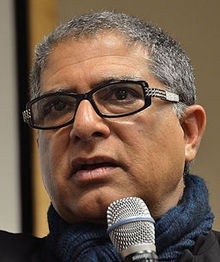
Deepak Chopra
1947 · 2 books on FireSoul · Transcendental Meditation movement, Ayurveda, Vedanta
Deepak Chopra is an Indian-born American physician and author who emigrated from Delhi to the United States in the early 1970s and became one of the most widely read figures in alternative medicine and New Age spirituality. Beginning with his 1989 book Quantum Healing, he built a global platform spanning dozens of books, the Chopra Center for Wellbeing, and the digital wellness platform Chopra Global, while attracting both mass readership and sustained criticism from the scientific mainstream for claims that human aging and disease respond to shifts in consciousness.
Books by Deepak Chopra


Biography
Deepak Chopra is an Indian-born American physician, author, and speaker who became one of the most recognisable voices in alternative medicine and spirituality during the final decades of the twentieth century.
He was born on October 22, 1946, into a family whose centre of gravity was medicine. His father, Krishan Chopra, was a distinguished cardiologist who trained in England in the 1940s, at a moment when the electrocardiogram was still new technology. Krishan’s diagnostic abilities were, by his son’s account, extraordinary: he could listen to a patient’s chest and estimate the P-R interval to within microseconds. Krishan Chopra served as physician to the President of India and to Lord Mountbatten, and he was among the first physicians to describe high-altitude pulmonary hypertension, making the diagnosis during the 1962 Sino-Indian War after landing a plane at 22,000 feet and treating soldiers in the field. He was also, Deepak has said, a compassionate storyteller, a kind of renaissance man. The elder Chopra’s influence on both his sons eventually became the subject of their joint memoir, Brotherhood: Dharma, Destiny, and the American Dream.
Deepak didn’t want to be a doctor. He wanted to write fiction. On his fourteenth birthday, his father gave him novels by Sinclair Lewis and Somerset Maugham, and every protagonist was a physician. The message landed. Sanjiv, the younger brother, had a different conversion: when he was twelve and a student at Saint Columba’s High School in Delhi, he went suddenly blind one afternoon, the result of an idiosyncratic reaction to an anti-tetanus injection. Their father, 300 miles away, diagnosed the condition by phone, prescribed intravenous corticosteroids, and Sanjiv’s vision returned six hours later. Both brothers would become doctors. But they’d become very different kinds.
Deepak completed his medical education in India before emigrating to the United States in the early 1970s, along with Sanjiv, who would go on to become a professor at Harvard Medical School and the author of five books on medicine. Deepak completed a residency in internal medicine and then a fellowship in endocrinology, training that gave him a scientific foundation he would later both draw on and strain against. By 1980, he was chief of staff at New England Memorial Hospital. He was 33 years old, licensed and credentialed, and already restless.
The decisive turn came in 1985, when Chopra met Maharishi Mahesh Yogi and entered the orbit of the Transcendental Meditation movement. Maharishi had brought TM to the West in the late 1950s and achieved global fame as the Beatles’ teacher; by the mid-1980s he was building an institutional infrastructure around Ayurveda, the ancient Indian system of medicine whose Sanskrit roots translate as “knowledge of life.” Chopra’s father had regarded Ayurveda as superstition and folk ways. Chopra himself was selective: “Just because something is ancient doesn’t mean it’s good.” But he found certain strands of the tradition, especially those concerning how consciousness shapes biology, persuasive on their merits. His training in neuroendocrinology had shown him that every emotional state produces a corresponding molecular signature in the body. That convergence, between an ancient framework and laboratory observation, is where his public career began.
He resigned from New England Memorial Hospital shortly after the Maharishi meeting and became a corporate officer within the TM movement, establishing the Maharishi Ayurveda Health Center. Working within that institutional structure, he started writing and teaching in a mode that would become his signature: Western clinical language applied to Vedantic ideas about consciousness, body, and time. His first book to find a substantial readership was Return of the Rishi: A Doctor’s Story of Spiritual Transformation and Ayurvedic Healing, published in 1988, a memoir-inflected account of his own intellectual and spiritual reorientation. He followed it in 1989 with Quantum Healing: Exploring the Frontiers of Mind/Body Medicine, the book that introduced the phrase “quantum healing” to popular culture. The argument it made was provocative: beneath the biological body lies a deeper layer of energy and information, which Chopra called the quantum mechanical body, and human aging and disease are therefore responsive to shifts in consciousness. It attracted devoted readers and sustained scientific criticism in roughly equal measure, and the controversy hasn’t much abated since.
The scientific criticism has been specific and pointed. Philosopher Robert Carroll has argued that Chopra misappropriates quantum mechanics to justify Ayurvedic claims, importing physics vocabulary into contexts where it doesn’t scientifically apply. Physicians and researchers have characterized his overarching system as pseudoscientific, with critiques ranging, as one evaluation noted, “from the dismissive to damning.” Chopra has contended that individuals can achieve a condition of health “free from disease, that never feels pain,” and that the rate at which a person ages is not fixed but can accelerate, decelerate, pause, or turn back altogether depending on one’s mental and emotional state. He has also claimed his practices can address chronic illness. These are large claims that mainstream medical consensus doesn’t support. The tension between the institutional medicine he trained in and the tradition he chose to champion has defined the terms of his public life ever since, and he’s shown no inclination to resolve it by retreating to either side.
In 1993, an appearance on The Oprah Winfrey Show changed the scale of everything. Oprah’s endorsement during that period was close to a cultural mandate, and Chopra’s books crossed from niche alternative health into mass-market consumption. He left the TM movement around this time to become executive director of the Center for Mind-Body Medicine at Sharp HealthCare in San Diego, a move that distanced him institutionally from Maharishi while keeping his substantive commitments intact. He had by then published multiple books, was speaking to sold-out audiences, and was beginning a multimedia expansion that would become characteristic: seminars, videos, interactive CD-ROMs, and, by the mid-1990s, screenplays and a hip-hop collaboration through Time Warner’s Tommy Boy Records. One of his screenplays, in development with London Films and tentatively titled “Lords of Light,” was set in Jerusalem and built around the premise that Satan had re-emerged in the Middle East, affecting what Chopra described as the collective psyche of the world. London Films’ CEO called it “Independence Day meets Siddhartha.” A second screenplay, for Kushner-Locke in Hollywood and provisionally titled “Juggernaut,” followed an American assassin who flees to India and undergoes a spiritual transformation. Both projects reflected Chopra’s consistent interest in bringing spiritual ideas into forms with mass cultural reach, whatever the genre.
In 1996, Chopra cofounded the Chopra Center for Wellbeing in La Jolla, California, in a soft-toned office complex that became his base of operations for the following decade. The centre offered meditation instruction, Ayurvedic spa treatments, and a retail arm carrying more than 150 products Chopra said he personally approved. By 1997 he estimated his annual gross at $15 million, with profits reinvested into the business, and his 19 books had been translated into 25 languages. He wasn’t merely selling ideas; he was selling an integrated ecosystem of practice, product, and identity. Benjamin Spock, then in his 94th year, was a regular visitor to the La Jolla centre and contributed a blurb for Chopra’s 1997 book Seven Spiritual Laws for Parents, calling it “profound and fascinating.” Spock’s wife Mary Morgan told Chopra at the centre that the new edition of Spock’s legendary Common Sense Book of Baby and Child Care would contain substantial references to Chopra’s framework. That detail is worth pausing on: the most trusted name in American paediatrics, in his final years, was revising his canonical text to include the work of the man many of his colleagues considered a New Age outlier.
That period in the mid-1990s was also marked by Chopra’s movement through what might be called the celebrity-philanthropic-spiritual circuit. He appeared on Bill Maher’s Politically Incorrect, where Maher accused him directly of spreading “preposterous psychobabble”; Chopra has said he enjoyed the appearances. He attended Michael Milken’s birthday gathering at Lake Tahoe. He headlined a symposium organised by Mikhail Gorbachev. He travelled to Costa Rica to raise funds for Nobel Peace Prize laureate Oscar Arias Sanchez’s world peace movement. And he contributed an essay to Playboy titled “Does God Have Orgasms?”, a piece that prompted Hugh Hefner to write to him that they held “very similar views on sex and spirituality.” The range wasn’t accidental; Chopra has always understood that influence travels along social networks, and he’s moved through all the available ones.
There’s something in this that resists easy categorisation, and it’s probably worth saying directly: the Vedantic tradition Chopra absorbed and transformed has carried human beings through grief, illness, and mortality for several millennia. That doesn’t make his specific claims about quantum mechanics and aging scientifically valid. But the sustained hunger his work meets in readers, across cultures and decades, suggests he’s pointing at something that clinical trials haven’t yet learned to measure. Not everything he says is that. Some of it is category error, and his critics aren’t wrong about which parts. Both things are true at the same time.
His core teachings cluster around several ideas that recur across dozens of books. The first is that the physical body is not the whole of what we are: beneath biological structure lies what he calls the quantum mechanical body, a field of energy and information that responds to intention and awareness. The second is that consciousness is primary, not a product of the brain but a fundamental condition of reality, and that health, including the process of aging, reflects the quality of one’s conscious states. The third is the concept of synchronicity and what he terms “the field of infinite possibilities,” drawn partly from the Vedantic idea of pure awareness, Brahman, and partly from quantum physics, however loosely deployed. The fourth, which becomes the explicit subject of his later theological writing, is that both traditional religious belief and scientific materialism are incomplete accounts of existence, and that a practical spirituality grounded in direct inner experience is available to anyone willing to look.
The Future of God: A Practical Approach to Spirituality for Our Times, published in 2014, is his most sustained attempt to make that fourth argument in book form. It doesn’t ask the reader to subscribe to any particular religion or creed. Instead, it argues that the question of God is fundamentally the question of consciousness, and that science and spirituality aren’t permanent adversaries but are converging, slowly, on the same ground. Whether the convergence is as tight as Chopra claims depends on how much you trust the conceptual bridge he builds between Vedanta and contemporary physics. His critics say it doesn’t bear structural weight. Many of his readers say it changed how they understood their own minds, which is a different kind of evidence and not entirely dismissible.
What Are You Hungry For?, published in the same period, applies the same underlying architecture to desire and appetite. The book’s central argument is that most human cravings, including compulsive eating and the various forms of addiction it can blur into, are displaced searches for wholeness, and that genuine fulfilment comes through expanded awareness rather than satisfying particular wants. The diagnosis is older than Chopra; it runs back through the Upanishads to the Vedantic observation that tanha, roughly translated as thirst or craving, is the root of suffering rather than the path out of it. Chopra’s contribution is a contemporary idiom for that insight: one accessible to readers who wouldn’t pick up a Sanskrit text but who recognise something true in it when it’s framed in the language of nutrition and psychology.
Chopra on gratitude is a good lens for his method overall. In 2014 he told Time magazine that “anger and hostility can be inflammatory not only in your mind but in your body,” and that “gratitude is healing. It expands your awareness and shifts your focus from something that’s actually hurting you to something that is healing.” This isn’t only a mood prescription. For Chopra it’s a physiological claim, rooted in his reading of psychoneuroimmunology, the study of how mental states modulate immune function. The clinical evidence for some version of this claim is in fact reasonably strong; where he runs into trouble is in the distance between the moderate effects documented in the literature and the sweeping therapeutic promises he sometimes makes.
By the mid-2000s, Chopra had published well over fifty books, with total sales in the tens of millions across more than two dozen languages. His institutional reach extended through the Chopra Foundation, established to advance research and education in integrative medicine, and through Chopra Global, a digital platform offering meditation instruction, wellness courses, and certified teacher training that extended his audience well beyond those who could attend his in-person events. In 2014 he established ISHAR, the Integrative Studies Historical Archive and Repository, a database designed to bridge conventional and alternative medical traditions through shared access to research and primary sources.
He and Sanjiv published Brotherhood: Dharma, Destiny, and the American Dream as a double memoir that traces their shared immigration story, their father’s formidable example, and the different trajectories the two brothers followed from the same Delhi upbringing. Sanjiv went to Harvard and became a hepatologist and professor of medicine. Deepak went to La Jolla. The memoir is also, quietly, an account of what it meant to carry Krishan Chopra’s example into American medicine through two entirely different channels: one son through the clinic, the other through the bookshelf. Deepak has said he considers himself “an American with an Indian accent”, a formulation that captures something real about how his identity has been structured: formed in Delhi, credentialed in Boston, famous in La Jolla, legible everywhere.
His reach among practitioners is felt through the certification programmes at Chopra Global, which have trained meditation teachers and wellness coaches working across the United States and internationally. Within the broader alternative medicine conversation he’s cited alongside figures like Andrew Weil and Jon Kabat-Zinn, though the three occupy genuinely different positions on the spectrum from clinical practice to metaphysical claim. Kabat-Zinn’s mindfulness-based stress reduction protocol stays close to measurable outcomes. Chopra reaches consistently toward something larger, and less falsifiable, which is both his limitation and the source of his particular appeal. You can’t really have the one without the other.
He was still writing and building out Chopra Global’s digital offerings as of the early 2020s, based in La Jolla. The restlessness his associates have long observed hasn’t visibly eased. “We are all just blips on the ocean of consciousness,” he said once. “They come, they go.” It’s a sentence that could read as resignation or as liberation, depending entirely on what you bring to it.
Core Teachings
-
The Quantum Mechanical Body
Chopra argues that beneath the biological body lies a deeper field of energy and information he calls the quantum mechanical body, and that health and aging are responsive to shifts in consciousness rather than fixed by biochemistry alone.
-
Consciousness as Primary Reality
Drawing on Vedantic ideas about pure awareness (Brahman), Chopra teaches that consciousness is a fundamental feature of reality rather than a product of the brain, and that the field of infinite possibilities is accessible through meditation and inner practice.
-
Practical Spirituality and the Future of God
In his 2014 book The Future of God, Chopra argues that science and spirituality are converging on the question of consciousness, and that a practical spirituality grounded in direct inner experience — rather than institutional religion or scientific materialism — is available to anyone.
-
Desire, Appetite, and the Search for Wholeness
In What Are You Hungry For?, Chopra argues that most human cravings — including compulsive eating and addiction — are displaced searches for wholeness, and that genuine fulfilment comes through expanded awareness rather than satisfying particular wants.
-
Gratitude and Psychoneuroimmunology
Chopra teaches that emotional states such as anger and hostility produce measurable inflammatory effects in the body, while gratitude and positive awareness are physiologically healing — a claim rooted in his reading of psychoneuroimmunology and his neuroendocrinology training.
Lineage
- Teachers
-
- Maharishi Mahesh Yogi — Met in 1985; Chopra became a corporate officer in the Transcendental Meditation movement and established the Maharishi Ayurveda Health Center before leaving the movement circa 1993.
Quotes
“We are all just blips on the ocean of consciousness. They come, they go.”
“Anger and hostility can be inflammatory not only in your mind but in your body. Gratitude is healing. It expands your awareness and shifts your focus from something that's actually hurting you to something that is healing.”
“Just because something is ancient doesn't mean it's good.”
External Links
- Deepak Chopra — Wikipedia (wikipedia)
- PBS NewsHour: Chopra Brothers on Brotherhood memoir (interview)
- Los Angeles Times: So Rich, So Restless (1997 profile) (archive)
- Time magazine: Chopra on gratitude and wellbeing (2014) (interview)
- The Future of God — publication reference (academic)
- The Future of God — Google Books (publisher)
- Watkins Magazine: Spiritual 100 List 2015 — ISHAR founding (archive)
- Maharishi Mahesh Yogi — Wikipedia (wikipedia)