
James D. G. Dunn (1939, 2020) was a British New Testament scholar and Lightfoot Professor of Divinity at Durham University, best known for coining the term ‘New Perspective on Paul’ in a 1982 lecture that reoriented how scholars read Paul’s opposition to ‘works of the law.’ His broader work, including the three-volume Christianity in the Making series, argued that Christian origins can only be understood by taking community memory and social practice seriously alongside texts.
Books by James D. G. Dunn


Biography
The denominational world he grew up in was split between Scottish Presbyterianism and Methodist nonconformity, and that dual inheritance planted two habits of mind that never fully separated: a Presbyterian insistence on the authority of scripture and a Nonconformist suspicion of received orthodoxy. Both would serve him well. He was licensed as a minister of the Church of Scotland in 1964, and for a while the pastoral and the scholarly ran alongside each other. From 1968 to 1970 he worked as chaplain to overseas students at the University of Edinburgh, a role that put him in daily conversation with Christians from across the world at the precise moment he was beginning to find his scholarly footing. You can’t easily reduce the church to a single cultural expression when you’ve spent two years fielding its global variety at close range, and Dunn never did.
In 1970 he was appointed lecturer in divinity at the University of Nottingham. He also served there as a Methodist local preacher, which tells you something about how he thought of his work: the seminar room and the pulpit weren’t separate jurisdictions for him. He was promoted to reader in 1979, and his research programme was by then well enough advanced that doctoral students were beginning to arrive specifically to work with him. Scot McKnight came to Nottingham with his wife Kris and their two young children for exactly that reason. On the day the McKnights arrived, Dunn turned up at the house to welcome them and immediately said, “Call me Jimmy”. McKnight later said Dunn was as interested in his students as people as he was in them as scholars. James Davis, David Meade, and Charles Holman were among the others working in that same Nottingham cohort, an early sign of what would become a genuinely international scholarly network built over decades.
He moved to Durham in 1982 as Professor of Divinity. In 1990 he was appointed Lightfoot Professor of Divinity, the chair named after the nineteenth-century scholar J. B. Lightfoot and one of the most distinguished posts in British biblical studies. Dunn held it until his retirement in 2003, when John M. G. Barclay succeeded him. At Durham the major monographs came to completion, two Festschriften were compiled in his honour, and doctoral students continued to arrive. Jeff Wisdom, who completed his doctorate there, recalled bringing a speculative idea to his biweekly supervisor meeting, having buried it at the bottom of his research report because it seemed to cut against a position Dunn had just published. Dunn turned straight to the last page and told Wisdom the idea might make a better contribution to scholarship than his own recent paper. The story circulates widely among former students because it isn’t unusual; every account of Dunn as a supervisor arrives eventually at some version of it.
The Manson Memorial Lecture. That’s where the pivot was.
He delivered it on 4 November 1982 at the University of Manchester under the title “The New Perspective on Paul.” A modified version appeared as one of the Wilkinson Lectures at the Northern Baptist Theological Seminary in Illinois, retitled “Let Paul be Paul.” The essay was first published in the Bulletin of the John Rylands Library, volume 65, in 1983, then collected in Jesus, Paul and the Law: Studies in Mark and Galatians (SPCK, 1990), and eventually anchored The New Perspective on Paul: Collected Essays (Mohr Siebeck, 2005; revised Eerdmans edition, 2008). The phrase became a field designation. It’s hard to name another single academic lecture in twentieth-century biblical studies that reshaped the discipline’s vocabulary so completely.
To understand what the argument was, you have to start with what it was arguing against. Protestant interpreters had been reading Paul’s opposition to “works of the law” as a frontal attack on Jewish merit theology, a vision of a religion run by a celestial accounting system in which the devout spent their lives trying to accumulate enough obedience to earn God’s favour. Paul, on this reading, and Luther after him, both recoiled from the exhaustion of it and announced grace as the alternative. Dunn’s argument, built directly on E. P. Sanders’s Paul and Palestinian Judaism (1977), was that this portrait of Judaism was historically indefensible. He was unambiguous about what Sanders had done: Dunn described Sanders’s book as the work of the previous decade or two that had genuinely broken the mould into which descriptions of Paul’s work and thought had been regularly poured for many decades. Sanders had worked through a wide body of Jewish sources to show that Second Temple Judaism wasn’t structured around earned merit at all. Its underlying grammar was what Sanders called “covenantal nomism”: God chose Israel by grace; Israel’s Torah observance was a response to that covenant, not its prerequisite. If that’s what the sources actually show, then Luther’s Paul, the Paul in flight from Jewish self-righteousness, can’t be the historical Paul.
Dunn took Sanders’s correction a specific step further. When Paul writes against “works of the law,” Dunn argued, the target isn’t moral effort as such. Paul is targeting circumcision, dietary regulations, and Sabbath observance specifically: practices that functioned as ethnic boundary markers, the ritual signals of Jewish group membership that divided Jews from Gentiles. These were the works Paul was contesting, because they were being used to police the borders of a community that now, through faith in Christ, included Gentiles on equal terms. The argument isn’t primarily about an individual’s tortured conscience before God. It’s about the social structure of the covenant community and whether ethnic markers can legitimately define its edges. This reorientation implicated Rudolf Bultmann and Ernst Käsemann directly; Dunn criticised both of them explicitly for reading Paul through Lutheran spectacles that had distorted what the first-century texts were saying. Identifying two of the most influential New Testament scholars of the twentieth century as having fundamentally misread their primary evidence wasn’t a careful, hedged move. Dunn made it in print anyway.
The stakes went beyond academic controversy. If Paul’s argument in Romans 9-11 isn’t that Jews have failed to earn their place before God but that ethnic privilege can’t be the basis for belonging in the community of faith, then centuries of Christian anti-Judaism that appealed to Paul were resting on a misreading. Dunn didn’t avoid that conclusion. In 2014 he wrote to The Guardian on the Gaza crisis, describing himself as a supporter of Israel’s right to exist while arguing that Israel’s West Bank settlement policy since 1967 violated its own Torah’s teaching on righteousness and justice as the prophets had reinforced it. He had written for the same paper on the same subject in 2009. The letters weren’t digressions. A man who had spent years insisting that Paul was arguing about ethnic boundaries and covenant membership was bound to notice when those theological categories had contemporary weight.
What Dunn was doing, when you pull back far enough to see it whole, was something harder than ecumenical softening. He was arguing that Christianity had been misreading its own founding documents in ways that had done actual damage to its relationship with Judaism, the tradition from which it came. That kind of correction demands more than goodwill; it demands honesty about what the texts say and willingness to name, publicly, who got them wrong and how. Not every tradition finds that easy, and Dunn didn’t pretend the corrective was comfortable. But it’s worth noting: the insistence that Paul was a Jew arguing about Jewish covenant faithfulness in a new situation, rather than a proto-Lutheran arguing against a religion of works, was itself an act of repair between two traditions that had been cast as opponents for much too long.
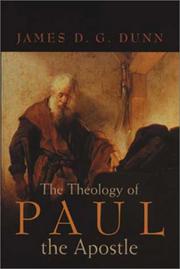
The New Perspective attracted sustained pushback. D. A. Carson and Thomas Schreiner, among others, argued that Dunn, Sanders, and N. T. Wright had pushed too far in the other direction, that Paul’s letters do address the individual’s standing before God, and that the Jewish sources are more varied than the New Perspective acknowledged. Dunn engaged these objections systematically in The Theology of Paul the Apostle (Eerdmans, 1997), a study of nearly 800 pages that moved through grace, faith, the Spirit, the body, ethics, and ecclesiology with the methodical density of a scholar who expected to be argued back at. It’s the most sustained single-volume treatment of Pauline theology from the New Perspective and one of the few that covers so much exegetical ground in one place.
He didn’t stay within the Pauline corpus. The project that occupied the second half of his career, and continued well into retirement, was the three-volume series Christianity in the Making. The first volume, Jesus Remembered (Eerdmans, 2003), argued that oral tradition has to be taken seriously as a historical source for the Synoptic Gospels, a position that challenged both the scepticism of the Jesus Seminar and the source-critical habits inherited from nineteenth-century German scholarship. Beginning from Jerusalem (Eerdmans, 2009) traced the first Christian communities through the generation immediately after the crucifixion, attending carefully to the social and institutional forms that emerged before the canonical texts were fixed. The third volume, Neither Jew nor Greek: A Contested Identity (Eerdmans, 2015), traced the early church’s negotiation of its identity across ethnic, cultural, and imperial boundaries through into the second century. Taken together, the trilogy makes the case that Christian origins can’t be reconstructed from texts alone; community memory and social practice have to count as evidence. It’s the natural extension of a scholar who had spent thirty years arguing that Paul’s letters were social documents before they were doctrinal ones.
Did the First Christians Worship Jesus? (SPCK, 2010) took up that question directly and in a form accessible to non-specialists. Dunn’s answer was carefully qualified: the first disciples did direct worship toward Jesus, but within the frame of the Jewish monotheism in which they were formed, not in the mode that later councils would formulate. Jesus, Paul and the Gospels (Eerdmans, 2011) gathered essays on the relationship between the Jesus tradition and the Pauline letters in a form accessible to readers outside the academy. Both books show Dunn’s consistent method: historical precision applied at precisely the points where dogmatic tradition most wants the New Testament to speak clearly in its favour.
The scholars most closely associated with the New Perspective alongside Dunn are N. T. Wright and Krister Stendahl, whose 1963 essay “The Apostle Paul and the Introspective Conscience of the West” had already begun dismantling the Lutheran Paul before Sanders published. Dunn gave the tendency its name and programmatic shape. Wright carried the argument in a more systematic and theologically constructive direction; Dunn stayed closer to the exegetical ground. When the two disagreed, as they sometimes did, the disagreements were productive. Wright wrote one of the two forewords to the 2009 Festschrift compiled for Dunn’s seventieth birthday, alongside Richard B. Hays of Duke Divinity School. That volume contained seventeen articles, all from Dunn’s former students who had gone on to academic and ministerial careers. A 2005 Festschrift, assembled by twenty-seven New Testament scholars, examined early Christian communities and their understanding of the Holy Spirit, a subject Dunn hadn’t left behind since his earliest work.
McKnight is probably the most publicly prominent of Dunn’s doctoral students, and his career, which combines rigorous exegetical scholarship with direct pastoral engagement, follows a pattern Dunn modelled. McKnight has said he counts himself privileged to have studied under Dunn and that what he most admired was Dunn’s willingness to follow the evidence wherever it led, even when it ran against his own published positions. That quality showed up again and again in the accounts former students gave of their supervision: not a supervisor who wanted agreement, but one who wanted the argument to go where the texts actually pointed.
In 2002 Dunn served as President of the Studiorum Novi Testamenti Societas, the principal international society for New Testament studies, a post only three other British scholars had held in the preceding twenty-five years. In 2006 he was elected a Fellow of the British Academy. These recognitions reflected a career that accumulated authority not through institutional position alone but through fifty years of sustained argument across a body of work running from the pneumatology of the earliest Pauline letters to the social history of the whole first Christian century.
He retired from the Lightfoot chair in 2003 but didn’t stop writing. Neither Jew nor Greek appeared in 2015. He kept attending Society of Biblical Literature meetings, kept supervising theses, and, as McKnight recalls, kept knowing the names of students’ spouses and children. McKnight’s memorial also notes that Dunn supervised doctoral theses in retirement without pay, a fact McKnight says he only learned many years after the work was done.
James D. G. Dunn died on 26 June 2020, survived by his wife, Meta, and their children Catrina, David, and Fiona.
Core Teachings
-
The New Perspective on Paul
Dunn argued that Paul’s opposition to ‘works of the law’ targeted Jewish ethnic boundary markers (circumcision, dietary rules, Sabbath) rather than moral effort per se, reframing Paul’s argument as being about the social composition of the covenant community rather than individual guilt before God.
-
Covenantal Nomism and the Jewish Context of Paul
Building on E. P. Sanders, Dunn insisted that Second Temple Judaism was not a religion of earned merit, and that centuries of Protestant interpretation had distorted Paul by reading him through Lutheran spectacles alien to his first-century Jewish context.
-
Oral Tradition and Jesus Research
In Jesus Remembered (2003), Dunn argued that oral tradition must be taken seriously as a historical source for the Synoptic Gospels, challenging both the Jesus Seminar’s scepticism and nineteenth-century source-critical assumptions.
-
Social and Community Origins of Christianity
The Christianity in the Making trilogy argued that Christian origins cannot be reconstructed from texts alone; community memory, social practice, and institutional forms must count as historical evidence alongside canonical documents.
-
Early Christology and Jewish Monotheism
In Did the First Christians Worship Jesus? (2010), Dunn argued that the earliest disciples did direct worship toward Jesus, but within the frame of Jewish monotheism rather than in the mode of later conciliar formulation.
Lineage
- Students
-
- Scot McKnight
- Jeff Wisdom
- James Davis
- David Meade
- Charles Holman
Quotes
“Call me Jimmy.”
External Links
- James D. G. Dunn – Wikipedia (wikipedia)
- The New Perspective on Paul – full text (Goodacre's NT Gateway) (archive)
- Rest in Peace, Jimmy – Scot McKnight memorial, Christianity Today (obituary)
- The Theology of Paul the Apostle – Bloomsbury catalogue (publisher)
- Jesus Remembered – Eerdmans catalogue (publisher)
- James D. G. Dunn on Gaza – Patheos / Religion Prof (interview)
- N. T. Wright – Wikipedia (wikipedia)
- Krister Stendahl – Wikipedia (wikipedia)
- John M. G. Barclay – Wikipedia (wikipedia)
- Richard B. Hays – Wikipedia (wikipedia)